预约演示
更新于:2026-08-12

Central China Normal University
更新于:2026-08-12
概览
标签
感染
肿瘤
其他疾病
小分子化药
预防性疫苗
偶联药物
疾病领域得分
一眼洞穿机构专注的疾病领域

技术平台
公司药物应用最多的技术
靶点
公司最常开发的靶点
关联
靶点 |
作用机制 |
在研机构 |
原研机构 |
在研适应症 |
非在研适应症 |
最高研发阶段 |
首次获批国家/地区 |
首次获批日期 |
靶点 |
作用机制 |
在研机构 |
原研机构 |
在研适应症 |
非在研适应症 |
最高研发阶段 |
首次获批国家/地区 |
首次获批日期 |
靶点 |
作用机制 |
在研机构 |
原研机构 |
在研适应症 |
非在研适应症 |
最高研发阶段 |
首次获批国家/地区 |
首次获批日期 |
ChiCTR2500110149
Effects of Squat Tempo Variation in Complex Training on Lower-Body Strength and Power
ChiCTR2500107130
Online ecological identification and intervention of cyberbullying
ChiCTR2600117337
Biomechanical Empirical Study on the Impact of Plyometric Training on Soccer Players' Change-of-Direction Ability Across Various Stabilization Planes
100 项与 华中师范大学 相关的临床结果
登录后查看更多信息
登录后查看更多信息
2026-12-01SPECTROCHIMICA ACTA PART A-MOLECULAR AND BIOMOLECULAR SPECTROSCOPY
Aggregation-morphology-induced amplification and inversion of CPL in N-chiral substituted indolocarbazole derivatives
Article
作者: Fu, Debin ; Liu, Shanting ; Liu, Sheng Hua ; He, Cancan
Circularly polarized luminescence (CPL) materials hold broad application prospects in chiral optoelectronic devices and other fields, and the precise regulation of aggregation morphologies to achieve CPL signal amplification and inversion is a research priority in this field. In this study, two chiral alkyl chain-modified indolo[3,2-b]carbazole derivatives, ICZ-2S/R and 2HICZ-2S/R, were designed and synthesized. Their self-assembly behaviors were regulated via antisolvent-induced and interfacial assembly strategies, yielding aggregates with distinct micro-morphologies in the solution aggregate state and spin-coated film state. The derivatives exhibited only weak CPL signals in the solution aggregate state, while significant CPL signal amplification and sign inversion were realized in the spin-coated film state, with the CPL intensity of ICZ-2Rfilm being nearly 6 times higher than that in the solution state. Combined analyses of ICZ-2S single crystal revealed that the crystal-like long-range ordered mesoscopic helical packing driven by edge-to-face C-H···π interactions in the film is the core mechanism for its excellent chiroptical performance. This work provides an efficient morphology regulation strategy for modulating the CPL properties of chiral N-containing polycyclic π-conjugated molecules, and also offers important references for the design and development of high-performance tunable CPL materials.
2026-10-01METHODS
Mapping protein–DNA interactions across biological scales: principles, scalability and applications
Article
作者: Li, Kangning ; Sun, Yanjia ; Song, Guang
Mapping protein-DNA interactions (PDIs) is essential for understanding transcriptional regulation and chromatin organization. Experimental approaches now range from in vitro assays that characterize intrinsic DNA-binding specificity to chromatin-based methods that capture protein occupancy in native genomes, as well as single-cell and single-molecule technologies that reveal regulatory heterogeneity across cells and individual chromatin fibers. These methods differ in resolution, sensitivity, input requirements, and their ability to preserve chromatin context, giving each approach distinct strengths and limitations. Here, we provide a comparative overview of major PDI technologies organized according to the biological scale at which they operate. We discuss their underlying principles, quantitative features, throughput, and key considerations for experimental design and method selection. We also review computational approaches for PDI analysis, including sequence- and chromatin-based binding prediction, multi-omics integration, and regulatory network inference. In addition, we discuss current challenges, such as platform-specific biases, sparse signals in single-cell datasets, and the lack of standardized benchmarking, and highlight future directions for improving PDI mapping and interpretation.
2026-10-01PSYCHIATRY RESEARCH
Mapping the symptom-risk network of adolescent non-suicidal self-injury: The roles of early adversity, family context, and internalizing distress
Article
作者: Ke, Qiang ; Nie, Shengnan ; Sun, Xiaojun ; Cao, Jun ; Niu, Gengfeng
BACKGROUND:
Non-suicidal self-injury (NSSI) is a major adolescent mental-health concern associated with adversity, family context, internalizing distress, peer victimization, and aggression. Yet the dimension-level conditional organization of these domains remains insufficiently characterized.
OBJECTIVE:
This study used network analysis to map the symptom-risk structure of adolescent NSSI and identify central, bridge, and highly predictable dimensions.
METHODS:
Complete-case network analyses were conducted among 10,179 Chinese adolescents. Twenty-four (24) Z-standardized dimensions across seven communities were entered into a Pearson EBICglasso Gaussian graphical model (γ = 0.50). Spearman sensitivity, edge-weight bootstrap, and case-dropping analyses evaluated robustness.
RESULTS:
The primary network retained 204 of 276 possible edges, yielding a density of 73.9 %. The strongest edges connected NSSI without obvious tissue damage with NSSI with obvious tissue damage (0.635), general anxiety with situational anxiety (0.582), and reactive aggression with proactive aggression (0.466). Notable cross-community edges revealed distinct associations between childhood adversities and two outcomes: emotional neglect-family atmosphere and sexual abuse-proactive aggression. Proactive aggression showed the highest strength and bridge strength; general anxiety, family atmosphere, reactive aggression, and emotional neglect also held prominent central or bridge positions. Mean predictability was 0.536. The Spearman network corresponded closely with the primary network (edge-weight r = 0.962; Jaccard = 0.732), and case-dropping analyses indicated stable centrality estimates.
CONCLUSION:
Adolescent NSSI was embedded in an interconnected symptom-risk network involving adversity, family context, internalizing symptoms, and aggression. The two NSSI dimensions were strongly related but had distinct cross-community neighborhoods, supporting differentiated assessment. Given the cross-sectional design, findings should be interpreted as conditional associations to inform future longitudinal and intervention research.
2026-08-06
·微解药
寡核苷酸引进/卖出核酸药物基因疗法
2026-08-04
100 项与 华中师范大学 相关的药物交易
登录后查看更多信息
100 项与 华中师范大学 相关的转化医学
登录后查看更多信息
组织架构
使用我们的机构树数据加速您的研究。
登录
或
管线布局
2026年08月22日管线快照
管线布局中药物为当前组织机构及其子机构作为药物机构进行统计,早期临床1期并入临床1期,临床1/2期并入临床2期,临床2/3期并入临床3期
药物发现
4
16
临床前
登录后查看更多信息
当前项目
登录后查看更多信息
药物交易
使用我们的药物交易数据加速您的研究。
登录
或
转化医学
使用我们的转化医学数据加速您的研究。
登录
或
营收
使用 Synapse 探索超过 36 万个组织的财务状况。
登录
或
科研基金(NIH)
访问超过 200 万项资助和基金信息,以提升您的研究之旅。
登录
或
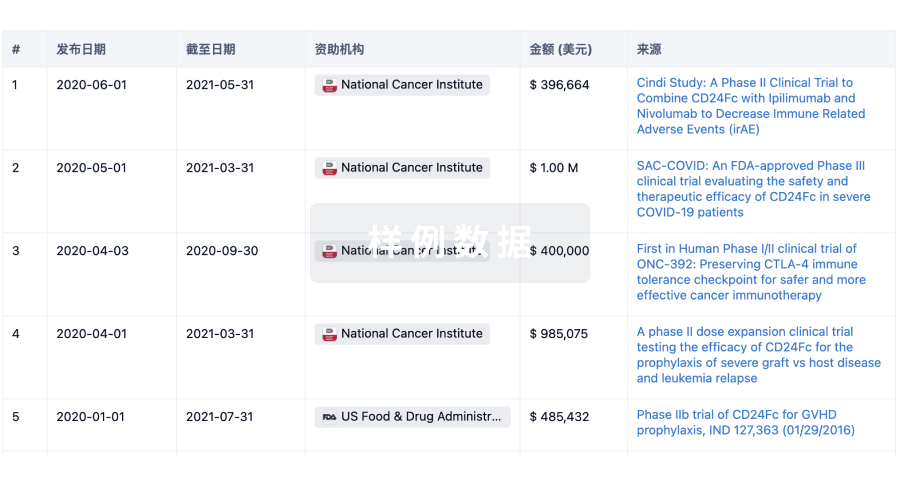
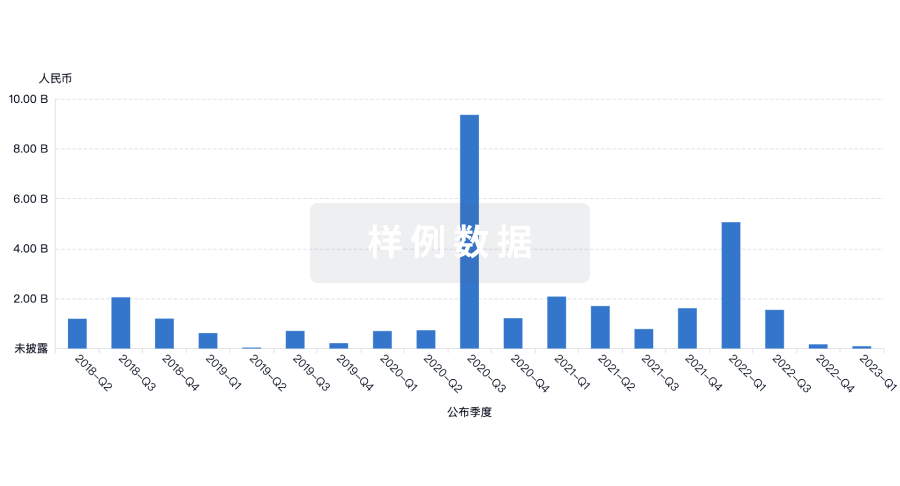
投资
深入了解从初创企业到成熟企业的最新公司投资动态。
登录
或
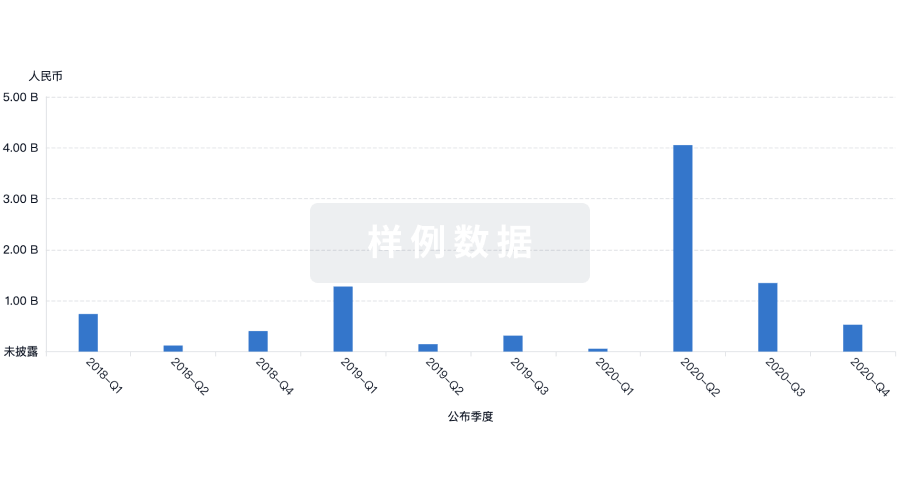
融资
发掘融资趋势以验证和推进您的投资机会。
登录
或
提出任何生物医药研究问题
让每一步生物医药决策都精准制胜
基于十亿级生物数据与全球情报的精准 AI,赋能早期药物发现
立即开始免费试用!
智慧芽新药情报库是智慧芽专为生命科学人士构建的基于AI的创新药情报平台,助您全方位提升您的研发与决策效率。
立即接入生物医药数据包
智慧芽新药库数据也通过智慧芽开放平台,以MCP或API服务形式对外开放。立即使用我们的MCP服务定制您的LLM智能体。
生物序列数据库
生物药研发创新
免费使用
化学结构数据库
小分子化药研发创新
免费使用